Hardwood floors add warmth and value to a home, but they are also more sensitive to cleaning mistakes than tile or laminate. The wrong cleaner or too much water can leave behind streaks, haze, or even warped boards. This guide covers the right tools, the safest cleaners, and a clear step-by-step method recommended by Shoukat Interior for keeping hardwood floors spotless without damaging the finish.
Understanding Your Hardwood Floor Before You Clean
Not every hardwood floor can be cleaned the same way, so it helps to know what you’re working with before choosing a method.
Sealed vs. Unsealed Hardwood
Most modern hardwood floors are factory-sealed with a polyurethane or aluminum oxide coating, which protects the wood from moisture. Sealed wooden flooring can handle a lightly damp mop and a proper hardwood cleaner. Unsealed, waxed, or oiled floors lack that protective layer, so water can soak directly into the grain, these floors are better suited to dry cleaning methods or a manufacturer-approved oil treatment.
Finish Types That Affect Cleaning Method
If you’re unsure whether your floor is sealed, waxed, or oiled, check with the installer or flooring manufacturer, or review the care guide for your specific product. This single detail determines nearly every other decision about which tools and cleaners are safe to use.
Essential Tools for Cleaning Hardwood Floors

A small set of the right tools is all you need.
Soft-Bristle Broom & Dustpan
A basic broom and dustpan remains one of the most effective ways to clear loose dirt, grit, and pet hair before it can scratch the finish, and it costs next to nothing.
Microfiber Dust Mop
Microfiber attracts and traps fine dust and hair rather than just pushing it around, making it more effective than a standard dry mop for daily upkeep. Most pads are also machine washable.
Vacuum Cleaner (Hard Floor Setting)
A vacuum with a hard-floor setting removes fine grit trapped between boards. Always switch off the beater bar, since the rotating brush is designed for carpet and can gouge a wood finish.
Spray Mop or Flat Mop System
A spray mop, or a flat mop with separate clean and dirty water tanks, gives far more control over moisture than a traditional string mop and bucket, applying a thin, even layer of cleaner instead of soaking the floor.
Best Hardwood Floor Cleaners to Use

The right cleaning solution matters as much as the right tools.
pH-Neutral Commercial Cleaners
Choose a cleaner labeled specifically for hardwood, or a multi-surface formula that lists hardwood among its approved surfaces. A pH-neutral, residue-free formula won’t strip the finish or leave a film behind. Options range from ready-to-use sprays that need no rinsing to concentrated versions you dilute yourself.
Homemade Natural Cleaning Solutions
A few household ingredients also work well when used correctly:
- Mild dish or castile soap, a few drops in warm water makes a gentle, everyday cleaner.
- Diluted white vinegar, roughly half a cup per gallon of water can cut through grease and grime, though frequent use may dull the finish over time, so it’s best kept as an occasional solution rather than a daily one.
- Baking soda paste, mixed with a little water, it lifts organic stains such as food or mud without scratching the surface.
Always test a new solution on a hidden area first, since finishes react differently.
Cleaners and Ingredients to Avoid
Some products that work well on tile or laminate flooring can actively damage hardwood:
- Bleach or ammonia-based cleaners, which break down the finish
- Wax-based polishes on floors that aren’t already waxed
- Oil soaps used too frequently, which build up and leave floors hazy or slippery
- Steam mops, since heat and trapped moisture can warp the wood over time
Step-by-Step Guide: How to Clean Hardwood Floors
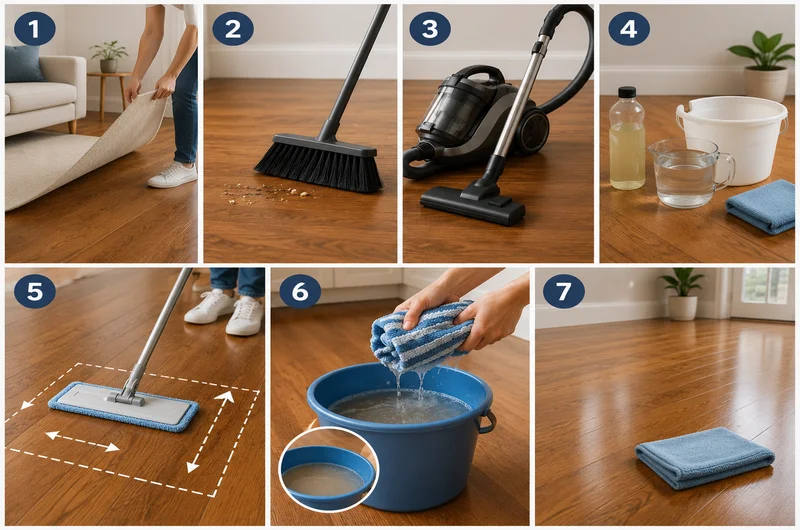
- Clear the room: Move furniture and rugs aside for full access to the floor.
- Dry clean first: Sweep or dust-mop the entire surface to lift loose dirt and hair.
- Vacuum the seams: Use the hard-floor setting with the beater bar off to catch grit between boards.
- Prepare your cleaning solution: Follow the dilution instructions closely, whether store-bought or homemade.
- Mop in small sections: Work in roughly 3×3-foot areas with a barely damp mop, moving with the grain of the wood.
- Rinse and wring often: Change bucket water as soon as it looks cloudy, and wring the mop out well before each pass.
- Air dry: Most hardwood cleaners need no rinsing, let the floor dry naturally, then buff lightly with a dry microfiber cloth for extra shine.
How to Remove Spills, Stains & Stubborn Marks

Act quickly: blot a fresh spill with a clean, dry cloth rather than wiping it, to stop liquid from seeping into the grain.
- Water rings or white spots: Rub gently with baking soda paste or a dab of mineral oil, then buff dry.
- Coffee, wine, or juice stains: Dab with a cloth dampened in the diluted vinegar solution, then dry the spot immediately.
- Pet urine or odor stains: A baking soda application helps neutralize odor while lifting the stain.
- Sticky residue: Non-acetone nail polish remover on a soft cloth can help, but test it on a hidden spot first.
Avoid letting liquid pool on the surface, and skip aggressive scrubbing, which can push a stain deeper or scuff the finish.
How to Deal with Scratches and Scuffs

Light scuffs usually buff out with a dry microfiber cloth. For small scratches, a wood-toned touch-up crayon can fill the gap and make it far less noticeable. Deeper gouges typically require wood filler and matching stain, or a professional’s help if the damage is extensive.
Daily and Weekly Hardwood Floor Maintenance Tips

- Place doormats at entrances to keep grit off the floor.
- Use area rugs in high-traffic zones and under rolling chairs.
- Add felt furniture pads under table and chair legs.
- Use furniture sliders when moving heavier pieces.
- Keep pet nails trimmed to prevent fine surface scratches.
Common Mistakes That Damage Hardwood Floors

- Over-wetting the mop. Excess moisture is the leading cause of warping and discoloration.
- Using the wrong cleaner category. Tile or vinyl cleaners aren’t formulated for wood and can leave a dulling residue.
- Skipping the dry-mop step. Wet-mopping over unswept dirt grinds grit into the finish.
- Relying on steam or excess water. Both are common causes of long-term damage on hardwood.
When to Call a Professional
Routine sweeping and mopping keeps floors looking good day to day, but hardwood also benefits from periodic buffing, re-coating, or full refinishing depending on foot traffic. If floors stay dull despite proper cleaning, or you’re dealing with deep scratches or an unknown finish type, it’s worth bringing in a flooring professional rather than experimenting further.
Final Thoughts
Cleaning hardwood floors well isn’t complicated once you understand the finish you’re working with. Stick to soft tools, a pH-neutral or properly diluted cleaner, and a light hand with water, and you’ll avoid the most common causes of damage, streaking, haze, and warping. A simple routine of daily dry cleaning paired with a monthly deep clean is enough to keep hardwood floors looking new for years, with occasional professional refinishing to restore their shine when needed.
Frequently Asked Questions
Is vinegar safe for hardwood floors?
In small, diluted amounts and used occasionally, yes. Regular or full-strength use can dull the finish over time.
How often should hardwood floors be deep cleaned?
A quick sweep or dust mop a few times a week, plus a deeper mop-and-cleaner session about once a month, is enough for most households.
Why do my hardwood floors look hazy after mopping?
This is usually leftover cleaner or soap residue. Go over the floor again with a barely damp microfiber mop and plain water, then dry thoroughly.
Can I use a regular vacuum on hardwood floors?
Yes, as long as the beater bar or rotating brush is switched off, since it can scratch the finish.