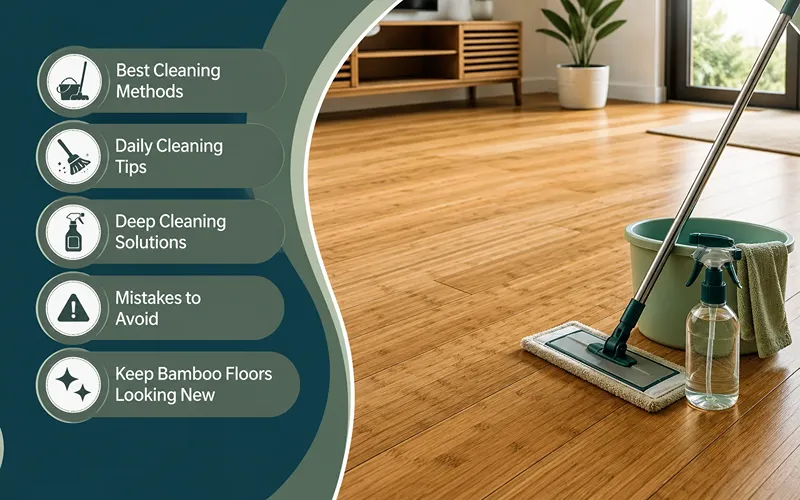
Bamboo flooring has earned its place in modern homes for good reason, it’s eco-friendly, durable, and brings a warm, natural look to any room. But that beauty comes with a catch: bamboo doesn’t respond well to the same cleaning habits people use on tile or laminate flooring. Too much water, the wrong cleaner, or an aggressive scrub can leave permanent marks on a floor that’s supposed to last for decades.
This guide by Shoukat Interior walks through exactly how to clean bamboo flooring the right way, the tools worth buying, and the mistakes that quietly ruin bamboo floors over time.
Why Bamboo Flooring Needs Special Care?

Bamboo is technically a grass, not a hardwood, and that structural difference matters. It’s dense and scratch-resistant on the surface, but like most wooden flooring, it’s still vulnerable to moisture. Many flooring pros consider it especially sensitive compared to traditional hardwood flooring like oak or maple. Leave a puddle sitting for a few hours, and you risk swelling, cupping, or discoloration that can be difficult to reverse.
Carbonized bamboo, the darker variety created through a heat treatment process, is generally softer than natural bamboo, because the same heat that darkens the wood also reduces its hardness, making it more susceptible to dents and wear. Strand-woven bamboo, on the other hand, tends to be tougher and more moisture-resistant, but it still isn’t waterproof.
The safest approach is to treat bamboo flooring as a moisture-sensitive finished floor and follow the manufacturer’s care instructions. Do that consistently, and it’ll hold its shine for years.
What You’ll Need to Clean Bamboo Flooring

Before getting into the steps, it helps to have the right supplies on hand:
- A soft-bristle broom or a vacuum with a felt head (no beater bar or rotating brush)
- A microfiber mop or a spray mop with a washable pad
- A pH-neutral bamboo or hardwood floor cleaner
- Soft, lint-free cloths for spills and stains
- A bucket, if you’re mixing your own solution
Skip the string mop, steel wool, and anything abrasive, bamboo’s finish scratches more easily than people expect.
What Can You Use to Clean Bamboo Flooring?

Here’s a quick reference for what’s safe and what to steer clear of:
| Cleaning Method/Product | Recommended |
| Microfiber mop | ✅ Yes |
| Bamboo-safe cleaner | ✅ Yes |
| Hardwood-safe cleaner | ✅ If manufacturer approved |
| Steam mop | ❌ Avoid unless manufacturer explicitly permits |
| Vinegar | ⚠️ Generally avoid |
| Bleach | ❌ Avoid |
| Ammonia | ❌ Avoid |
| Abrasive scrubber | ❌ Avoid |
| Excess water | ❌ Avoid |
| Wax/polish | ⚠️ Only if manufacturer recommends |
When in doubt, check your SPC flooring manufacturer’s care guide, finishes vary, and what’s safe for one bamboo product may not be for another. With that reference in hand, here’s how the actual cleaning process breaks down.
Step-by-Step: How to Clean Bamboo Flooring
1. Clear Away Dust and Grit First

Loose dirt is the biggest hidden threat to any wood floor. Every time someone walks across gritty debris, it acts like sandpaper on the finish. Sweep with a soft broom or vacuum daily (or every other day in high-traffic homes), and always use a vacuum head without a beater bar.
2. Pick a Cleaner That Won’t Strip the Finish

This step trips up more people than any other. Bamboo needs a pH-neutral, hardwood-safe cleaner, nothing acidic, oily, or wax-based. Popular options include cleaners specifically labeled for bamboo or engineered wood floors. Some sources suggest a heavily diluted, mild dish soap solution as a temporary substitute, but this isn’t universally recommended. A purpose-made pH-neutral cleaner is the safer choice. When possible, check your flooring manufacturer’s guidance before trying any DIY mix.
3. Mop With Minimal Moisture
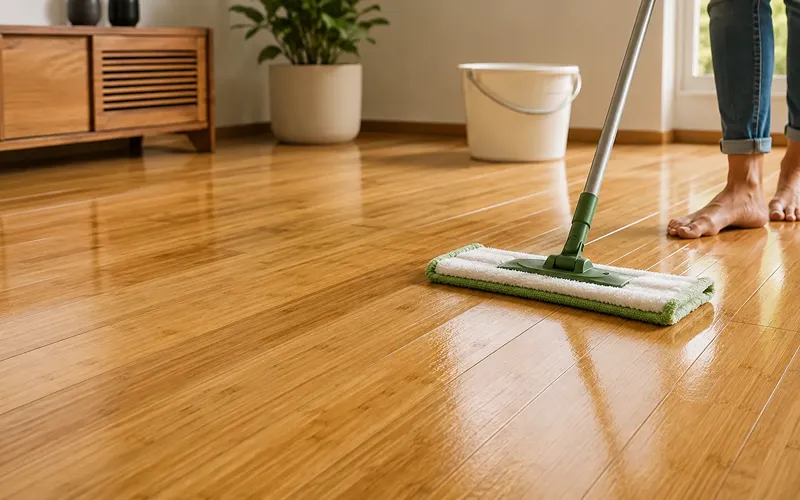
Dip your mop in the cleaning solution, then wring it out until it’s just barely damp, not wet. Mop in the direction of the bamboo grain, working in small sections so no water sits on the surface for long. If your floor looks glossy afterward, a light pass with a clean, damp mop and plain water removes any leftover residue.
4. Dry the Floor Right Away

Don’t skip this part. Go over the floor with a dry microfiber cloth or dry mop immediately after cleaning. Even a small amount of standing moisture can seep into seams between planks and cause long-term warping.
5. Handle Spills, Scuffs, and Sticky Spots Separately

For everyday spills, wipe them up the moment you notice them with a dry or barely damp cloth. For scuff marks or sticky residue, spot-clean with a little bamboo-safe cleaner on a soft cloth rather than scrubbing the entire floor. A soft plastic scraper, the edge of an old gift card works well, can lift dried-on gunk without touching the finish.
Best Products for Cleaning Bamboo Floors

Look for cleaners explicitly labeled for bamboo, engineered hardwood, or sealed wood floors. Well-known hardwood-safe brands and dedicated bamboo cleaning solutions are widely available at hardware and home stores. Whatever you choose, always spot-test on a hidden area or a spare plank first. Finishes vary by manufacturer, and an unexpected reaction is far easier to fix on a scrap piece than on your living room floor.
How Often Should You Clean Bamboo Floors?
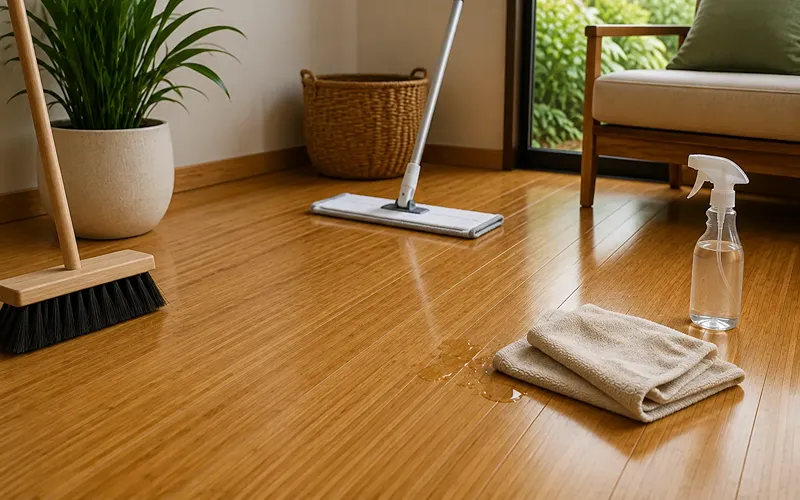
- Daily or every other day: Sweep or dry-mop to remove dust and grit.
- Weekly: Damp mop with a pH-neutral cleaner.
- As needed: Spot-clean spills and stains immediately, no matter the day.
Sticking to this rhythm prevents the kind of dirt buildup that eventually dulls bamboo’s natural shine.
Deep Cleaning vs. Everyday Maintenance
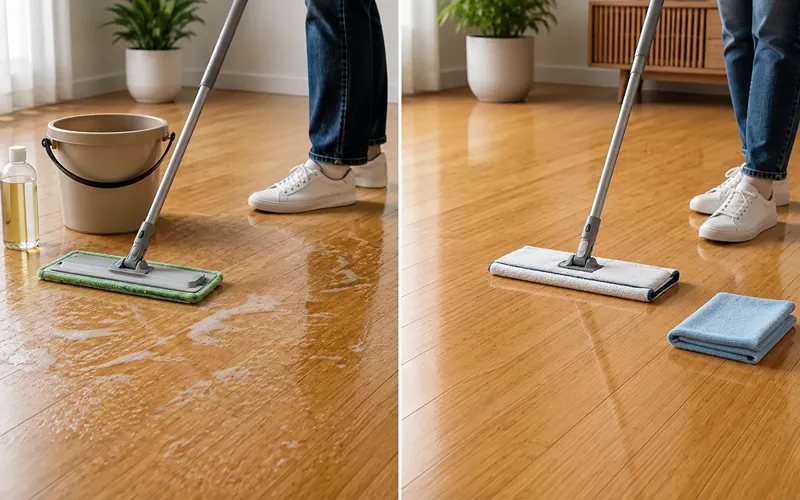
Everyday maintenance is about keeping grit off the surface. Deep cleaning, done monthly or seasonally, involves a more thorough damp-mop pass with cleaner. Some cleaners recommend following up with a light plain-water rinse pass to help lift residue buildup, though this isn’t necessary for every product, check the label first. If your floor still looks dull after a deep clean, residue buildup is a common culprit, so switching cleaners or adjusting your rinse routine is worth trying.
Mistakes to Avoid When Cleaning Bamboo Flooring

Using a steam mop. Heat and steam force moisture into the seams between planks, which can warp the wood and void the manufacturer’s warranty.
Cleaning with vinegar, ammonia, or bleach. These are common DIY floor-cleaning ingredients, but they’re too acidic or harsh for bamboo’s finish and can dull or discolor it over time.
Letting water sit. Even a small puddle left for a few hours can cause swelling or staining. Wipe spills the moment they happen.
Vacuuming with a beater bar. Standard upright vacuums designed for carpet often have rotating brushes that scratch hardwood-style finishes.
Skipping doormats and rugs. Grit tracked in on shoes is one of the most common causes of surface scratches. A doormat at every entrance and a rug in high-traffic zones go a long way.
Ignoring humidity levels. Bamboo expands and contracts with humidity swings. Keeping indoor humidity in the 40-60% range helps prevent both drying-out and swelling.
Using wax or polish. Unlike some wood floors, bamboo with a factory finish doesn’t need wax, and applying it can leave a cloudy film that’s difficult to remove.
How to Protect Bamboo Floors Long-Term

A few habits make a bigger difference than any single cleaning product:
- Attach felt pads to furniture legs to prevent scratches and dents.
- Trim pet nails regularly to reduce surface scuffing.
- Rotate rugs occasionally and use window coverings to limit direct sunlight, which can fade bamboo over time.
- Avoid rubber or latex-backed mats, since they can trap moisture against the surface.
- Keep a few spare planks from installation on hand to test new cleaners before using them on the full floor.
How Bamboo Compares to Other Flooring Types

If you’re weighing bamboo against other options, or you have a mixed-flooring home and want to get the cleaning routine right for each room, it helps to know how the maintenance differs:
- Hardwood flooring shares many of bamboo’s moisture sensitivities and generally follows a similar cleaning routine.
- Laminate flooring has a synthetic wear layer that tolerates a bit more moisture but still shouldn’t be soaked.
- SPC flooring (stone plastic composite) is fully waterproof, making it a lower-maintenance option for kitchens and bathrooms.
- Vinyl flooring is also water-resistant and typically easier to clean with standard household products.
If bamboo’s moisture sensitivity feels like more upkeep than your household wants, these alternatives are worth a look, especially for spill-prone spaces.
Final Thoughts
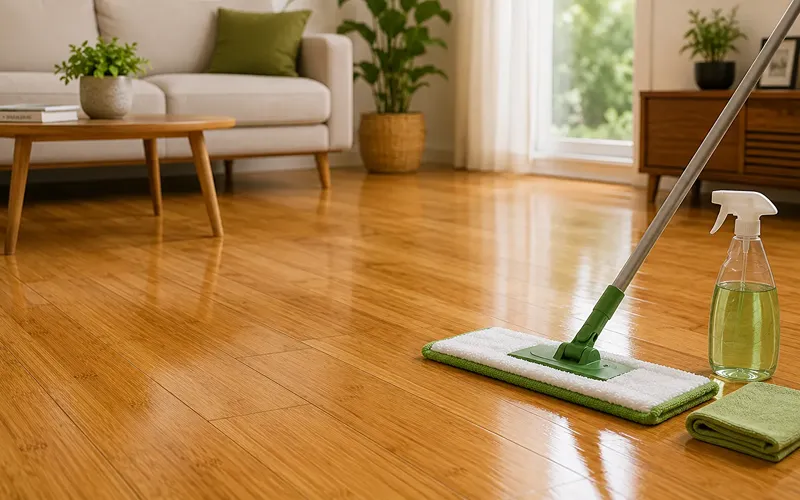
Cleaning bamboo flooring isn’t complicated once you know the rules: sweep often, mop with minimal water, use a pH-neutral cleaner, and dry the surface right away. The floor rewards consistency, a few minutes of care each week keeps it looking new for years, while a handful of avoidable mistakes are what actually shorten its lifespan. Stick to the routine above, and your bamboo floors should stay scratch-free, shiny, and damage-free well into the future.
Frequently Asked Questions
Can I use a steam mop on bamboo floors?
It’s best avoided. Most bamboo manufacturers don’t approve steam mops, and using one can void your warranty even if the floor looks fine at first.
Is vinegar safe for bamboo floors?
Most manufacturers and flooring experts recommend avoiding it. It’s a common DIY hack for other floor types, but repeated use on bamboo tends to wear down the protective coating faster than a pH-neutral cleaner would.
How do I get my bamboo floor to shine again?
A thorough deep clean, with a plain-water rinse pass if your cleaner calls for one, can often restore shine by removing built-up residue. If the floor still looks dull afterward, the finish itself may need professional attention.
What’s the best mop for bamboo floors?
A microfiber mop or spray mop with a washable pad is ideal, it holds just enough moisture to clean without soaking the surface.
Can you mop bamboo floors with water?
Yes, but only with a well-wrung, barely damp mop, dry the floor right after.
Can you use Murphy’s Oil Soap on bamboo floors?
Some guides approve it, others don’t due to residue buildup. Spot-test first, or check your manufacturer’s guidance.
Can you use a Swiffer on bamboo floors?
Dry Swiffer sweepers are fine. WetJet is more debated, a dedicated pH-neutral cleaner is the safer choice.
How do you remove stains from bamboo flooring?
Gently rub with a soft cloth and pH-neutral cleaner. Avoid scrubbing, steel wool, or acidic cleaners.
How often should bamboo flooring be deep cleaned?
Monthly to seasonally for most homes; more often with pets, kids, or heavy foot traffic.