Curtains rarely get the credit they deserve. A sofa or a coffee table might catch the eye first, but it is the window treatment that quietly decides how a living room feels, warm or cold, finished or unfinished, roomy or boxed-in. The right curtains regulate daylight, add seclusion from the street, soften hard architectural lines, and pull together the colour story of the whole space.
Across the installations we see most often, the single biggest regret homeowners share isn’t the fabric or colour they picked, it’s a curtain rod that was hung too low or too narrow. Getting the sizing right before falling in love with a fabric saves the most rework later.
This guide by Shoukat Interior covers what actually goes into choosing curtains for a living room design: sizing, colour pairing, budget, the styles suited to different interior themes, treatments for tricky window shapes, and fabric choices for hot climates, before walking through 25 curtain ideas and designs currently trending.
Curtain Types at a Glance: Comparison Table

Blackout curtains give the most privacy and least light; sheers give the least privacy and most light; layered sheer-and-drape set-ups and thermal curtains sit in between and add temperature control.
| Type | Privacy | Light Filtering | Best For |
| Sheer Curtains | Low | High, soft, diffused glow | Bright rooms, daytime privacy, layering |
| Linen Curtains | Medium | Medium, airy, filtered light | Modern, coastal and Scandinavian living rooms |
| Cotton Curtains | Medium | Medium | Everyday living rooms, easy upkeep |
| Velvet Curtains | High | Low, heavy and light-blocking | Formal or luxury living rooms, cooler climates |
| Blackout Curtains | Very High | Very Low, near full block | Media rooms, west-facing or street-facing windows |
| Thermal Curtains | High | Low to Medium | Hot or cold climates, energy savings |
| Layered Sheer + Drape | Adjustable | Adjustable, day/night flexibility | Living rooms wanting both daylight and evening privacy |
Top 25 Trending Living Room Curtain Styles
The most-requested living room curtain trends right now combine natural fabrics (linen, cotton), warm or jewel-toned colour, ceiling-height hanging, and practical upgrades like thermal lining or motorized tracks.
These 25 curtain designs are grouped loosely by fabric, colour, heading style and function, so it’s easier to compare options that solve the same problem.
- Floor-to-Ceiling Linen Panels

Long linen curtains that run from ceiling to floor add height and quiet elegance that shorter panels can’t match. Warm oat, sand beige, and soft ivory shades keep the look airy, making this one of the most requested living room drapery choices for open-plan and contemporary spaces.
- Textured Sheer Curtains
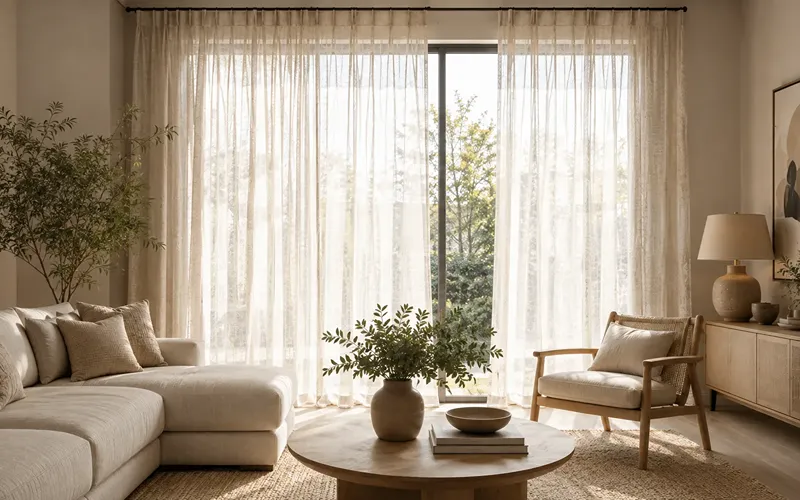
Sheer curtains have moved on from plain white voile. Slub cotton, crinkled linen, and embroidered organza are now common choices that turn daylight into a soft, diffused glow instead of blocking it, without leaving the room feeling shut in.
- Layered Sheer and Drape Combinations
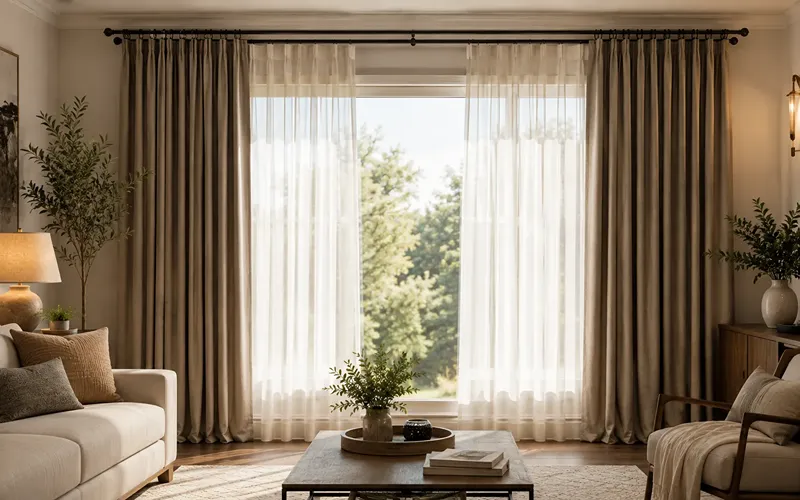
Pairing an inner sheer layer with a heavier outer drape on a double rod gives full control over brightness and seclusion. Sheers stay closed by day for a soft glow, while the heavier drape closes at night for warmth, a practical curtain idea that keeps gaining ground.
- Jewel-Tone Velvet Curtains

Emerald green, wine red, sapphire blue and deep amber velvet curtains bring a rich, opulent feel to a room. The plush texture also absorbs sound and adds a cosy, high-end feel against neutral walls.
- Terracotta and Burnt Sienna Drapes

Warm earth tones such as terracotta, burnt sienna and golden ochre are replacing cooler colour schemes in many homes this year. These shades pair naturally with cream walls, wood tones and brass hardware for a current, non-trend-chasing look.
- Olive Green Curtains

Olive green curtains bring a grounded, nature-inspired feel and work particularly well alongside plants, rattan furniture or wooden flooring. The tone is deep enough to add contrast without overpowering lighter furnishings.
- Navy Blue Curtains

Navy remains one of the most dependable colours for a classic or neoclassical scheme. It reads as calm and a little formal, pairs easily with brass, gold or cream accents, and hides everyday wear better than pale shades.
- Cream and Warm Neutral Curtains

Cream, warm beige and soft ivory continue to be the safest, most versatile living room window curtains available. They brighten a space, complement almost any furniture colour, and suit both traditional and Scandinavian interiors.
- Soft Grey Curtains
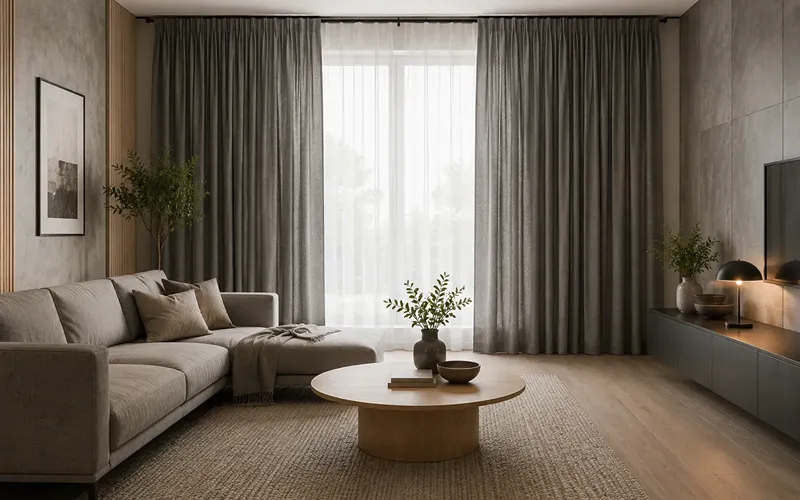
Light grey works well in pared-back, minimalist rooms, while a deeper charcoal suits industrial or more formal spaces. Grey has cooled off slightly as the single dominant trend, but still pairs beautifully with oak, stone and woven textures.
- Two-Tone or Colour-Block Panels
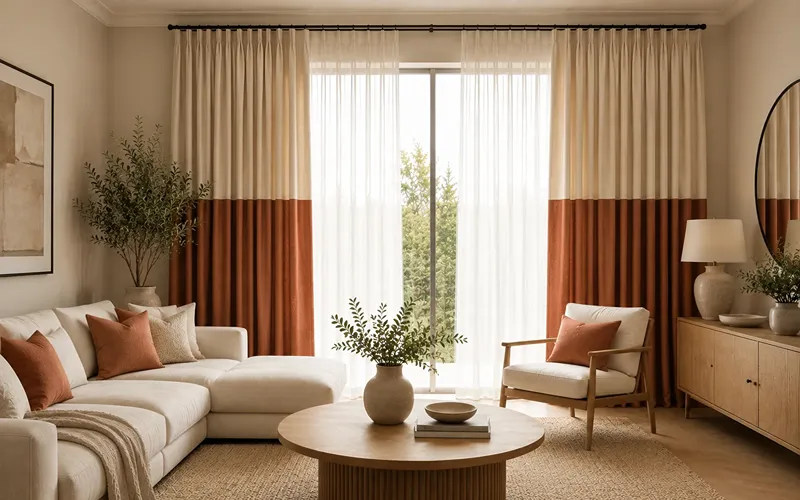
Two-tone curtains introduce an accent colour at the window without committing to bold paint or furniture. Because the colour lives only at the window, it’s an easy detail to change later, making this a low-risk way to experiment with curtain designs.
- Blackout Curtains

Fully blackout curtains are no longer limited to bedrooms. In media rooms or living rooms with a west-facing window, blackout panels offer genuine brightness control while still looking tailored when made from a good-quality fabric.
- Thermal and Energy-Efficient Curtains

Thermal curtains, insulated by design, trap warm air in winter and block heat in summer, which can meaningfully cut energy costs. They’re especially popular in living rooms and sunrooms where temperature swings are most noticeable throughout the day.
- Eyelet or Grommet Curtains

Eyelet curtains use metal rings sewn directly into the fabric so panels glide smoothly along the rod. The even, structured folds give a clean, contemporary look suited to modern curtains with minimal styling.
- Pinch Pleat Curtains

Pinch pleat curtains are stitched and gathered at the top for a tailored, formal finish. Available as two-, three- or five-finger pleats, they hang in neat, even folds and remain one of the most recognisable curtain designs for living rooms.
- Pencil Pleat Curtains

Pencil pleat curtains feature thin, tight folds that resemble a row of pencils along the header. The style suits both casual and slightly more formal rooms, and works with most rod types.
- Box Pleat Curtains
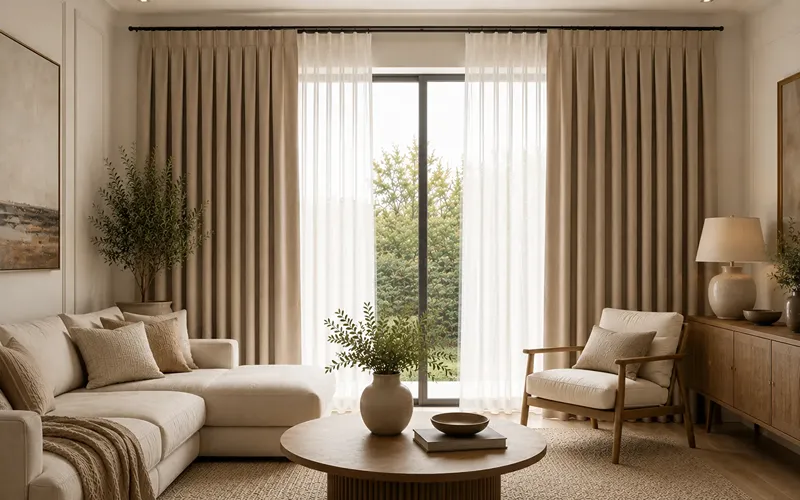
Box pleat curtains have wide, structured folds that create a crisp, tailored finish, suited to living rooms, lounges and dining areas where a slightly buttoned-up appearance is the goal.
- Goblet, Tab Top and Rod Pocket Curtains

Three lower-demand but still useful heading styles: goblet pleat curtains are decorative and stationary, best for large formal rooms with high ceilings; tab top curtains hang from fabric loops for a relaxed, boho-friendly look; and rod pocket curtains slide directly onto the rod for a simple, budget-friendly gathered finish.
- Boho Macrame and Tassel Curtains

Macramé accents, tassels and fringe trims add artisanal, handmade character. Lightweight cotton or linen in natural tones keeps the look breezy, suiting eclectic or travel-inspired interiors particularly well.
- Sustainable and Natural-Fibre Curtains

Organic cotton, linen, jute and bamboo-blend curtains are steadily gaining ground as homeowners look for more environmentally responsible materials. These natural fibres also drape softly and diffuse light more gently than synthetic fabrics.
- Curtains Layered Over Woven Shades

Pairing linen or cotton curtain panels with a woven wood or bamboo shade underneath gives a room two layers of texture. The shade handles precise brightness control close to the glass, while the fabric panels soften and frame the window.
- Smart and Motorized Curtains
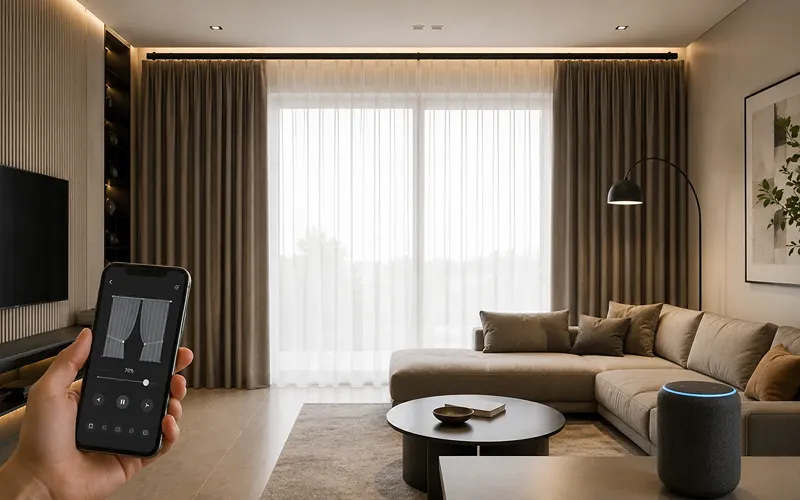
Motorized curtains, on tracks that open and close on a schedule or with a voice command, are becoming more common in modern curtain set-ups. Beyond convenience, they help with consistent temperature control and evening seclusion without anyone touching a cord.
- Double Panel Curtains
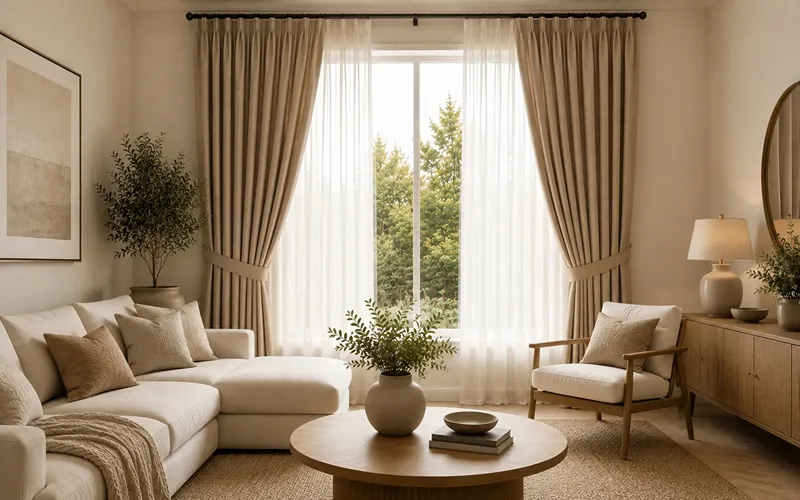
A classic double-panel set-up, with one panel on each side of the window, remains a dependable choice for living rooms of almost any size. It offers a balanced, symmetrical look and can be styled fully open, half-drawn or closed.
- Ceiling-Height Ripple Fold Drapes
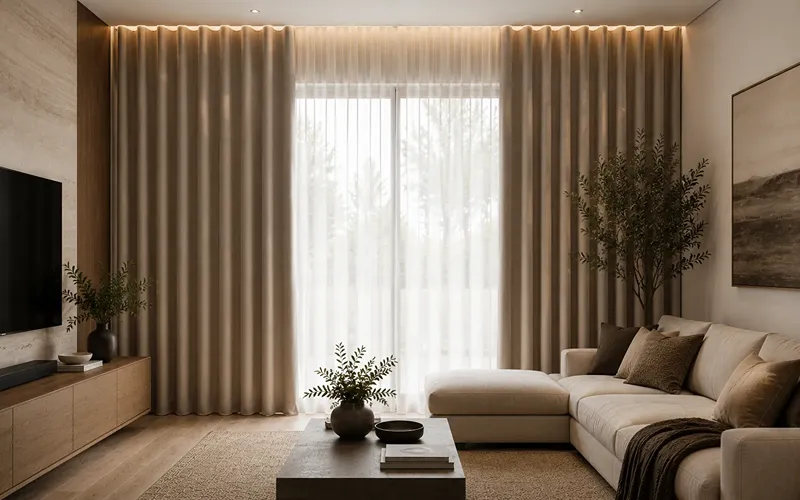
Ripple fold curtains hang in soft, continuous S-shaped waves along a track, giving a clean, tailored silhouette without visible pleats. Hung from ceiling to floor, this style reads as understated and architectural.
- Designer Statement Curtains
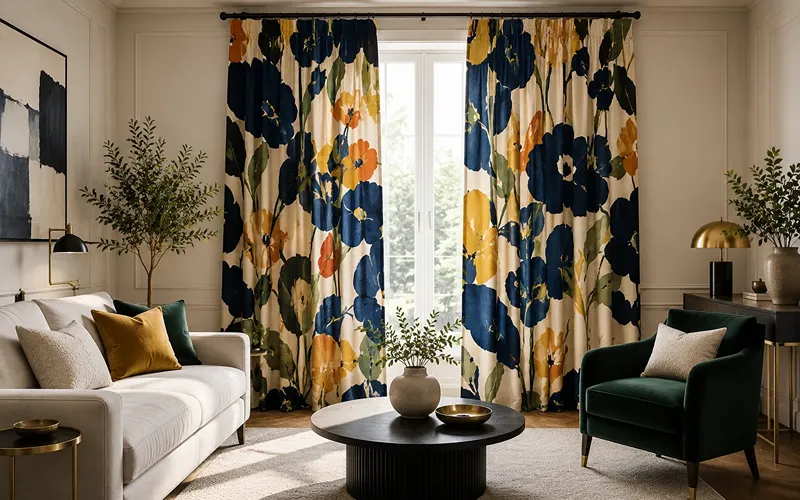
Bold prints, oversized florals, or artist-collaboration fabrics are increasingly used as a single focal point in an otherwise neutral living room. One statement window, rather than a fully patterned room, keeps the look current without overwhelming the space.
- Cafe-Style Half Curtains
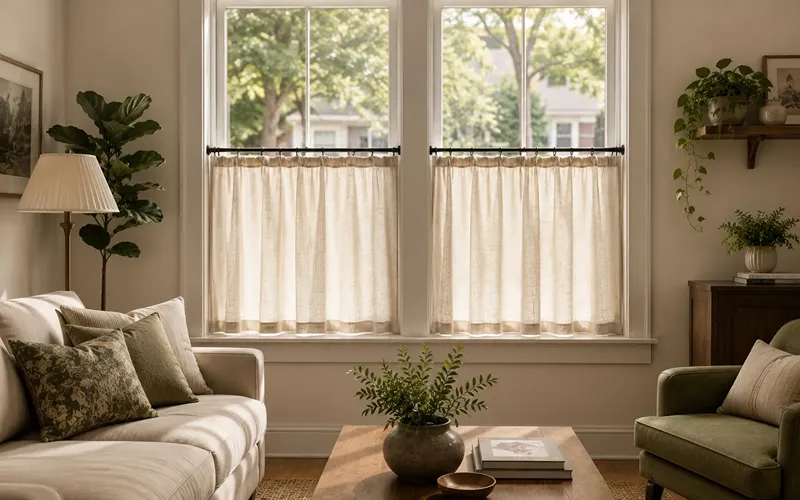
Covering only the lower half of a window, café curtains keep the upper glass clear for daylight while screening the sill-level view. They suit ground-floor living rooms facing a street or garden path where full-height coverage isn’t needed.
Curtains by Interior Style
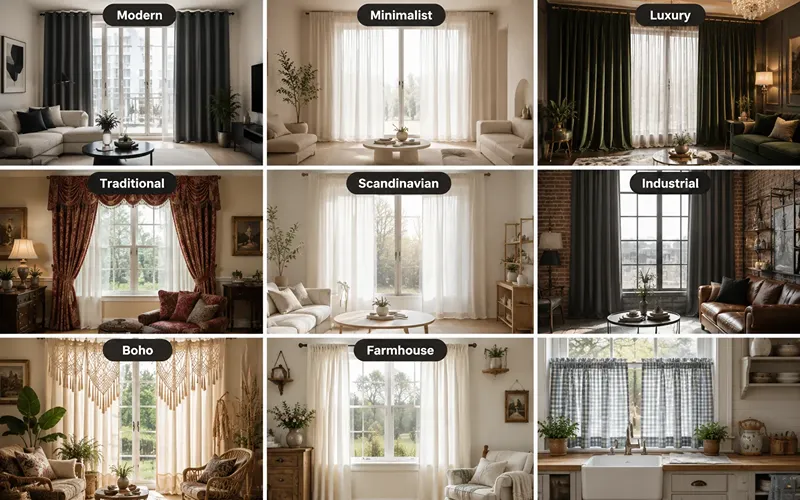
Modern and minimalist rooms suit solid, unfussy panels; luxury and traditional rooms suit heavier fabrics and structured pleats; Scandinavian, boho and farmhouse rooms suit natural, lightweight fibres.
The right curtain style should match the design language of the room, not fight it.
Modern
Contemporary living spaces favour clean lines and minimal fuss. Solid-colour panels in neutral or monochrome tones, hung with an eyelet, grommet or ripple fold heading, keep the look sharp. Pattern and heavy trims are best avoided here.
Minimalist
Pared-back spaces call for the least visually busy option: lightweight sheer or solid panels in muted tones, hung ceiling-to-floor with no valance or trim, so the curtain recedes into the architecture rather than drawing attention.
Luxury
Luxury curtains lean into rich, tactile fabrics, velvet, silk or heavy lined cotton, in jewel tones or deep neutrals. Floor-length panels with a slight puddle, pinch or goblet pleat headings, and a layered set-up all read as considered and high-end.
Traditional
Traditional interiors suit pinch pleat curtains in richer colours such as burgundy, forest green, navy or gold, sometimes with a subtle damask or floral pattern. Tiebacks and a matching valance complete the classic look.
Scandinavian
Scandi-style rooms are built around brightness and simplicity. Linen or cotton curtains in white, oat or pale grey, hung with a simple rod pocket or tab-top heading, keep the room feeling airy and unfussy.
Industrial
Industrial interiors work well with curtains in deeper, muted tones, charcoal, rust or olive, in raw-textured fabrics like heavy linen or canvas. Metal grommet or eyelet rings echo the exposed metal finishes typical of this style.
Boho
Boho rooms embrace texture and imperfection: natural cotton or linen curtains with macramé trims, tassels or fringe, often in warm earthy tones or a single jewel-coloured accent panel layered with patterned throws elsewhere.
Farmhouse
Farmhouse style favours simple, practical curtains, cotton or linen in white, cream or soft blue, sometimes in a light check or gingham. A relaxed rod pocket or café-style curtain fits the unfussy character of this look.
Curtains by Window Type
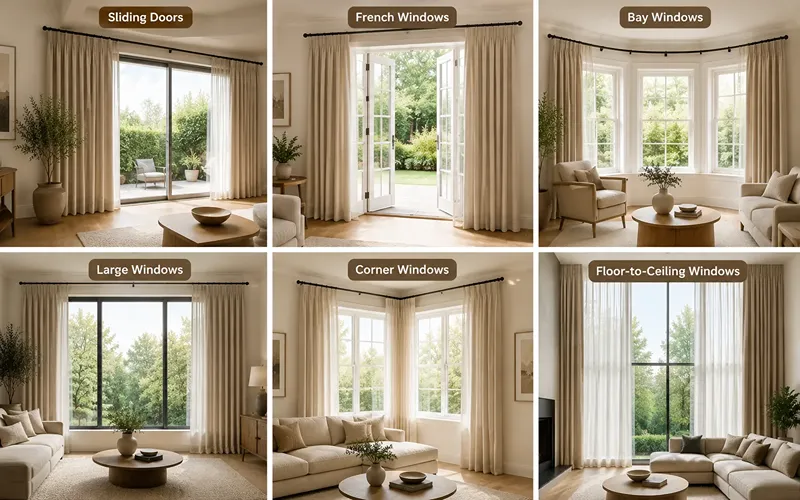
Sliding doors and large windows need wide tracks and extra fullness; French and bay windows need lighter fabric or a curved track; floor-to-ceiling windows benefit most from ceiling-mounted, full-length drapery.
Sliding Doors
Sliding glass doors need a wide track that lets curtains stack fully to one or both sides without blocking the doorway. A ripple fold or eyelet heading glides smoothly along a track; mounting close to the ceiling keeps the whole wall looking intentional.
French Windows
Because French windows open outward, curtains need to clear the doors completely when open. Lighter or medium-weight fabric avoids bulk at the sides, and the rod should sit high enough that panels don’t interfere with the door swing.
Bay Windows
Bay windows are best fitted with a curved or angled track that follows the shape of the bay rather than a single straight rod. Giving each window section its own panel on a flexible track keeps brightness control even across the whole bay.
Large Windows
Oversized windows need a higher fullness ratio, and sometimes extra panels, so the curtains don’t look sparse against so much glass. A heavier fabric or a layered combination helps anchor the window rather than being overwhelmed by its own size.
Corner Windows
Corner windows, where two panes meet at an angle, are best treated as two connected rod systems that nearly touch at the corner, so the curtains read as one continuous treatment rather than two disconnected windows.
Floor-to-Ceiling Windows
These call for a ceiling-mounted track, full-length panels that just reach or lightly brush the floor, and a heading like ripple fold or eyelet that emphasises height. Given the large glass area, a thermal or lined fabric is also worth considering for both seclusion and temperature control.
Curtains by Climate: Best Options for Hot Weather

For hot climates, a dense, multi-layer thermal or thermal-blackout curtain in a lighter shade (or with a light-coloured lining facing the window) gives the best combination of heat reduction, UV protection and comfort.
In hot, sun-heavy climates, Dubai and the wider Gulf region being a good example, where summer temperatures regularly pass 45°C, curtain fabric and colour choices affect indoor comfort far more than in milder climates.
Best Curtains for Hot Weather
Dense, tightly woven fabrics with a thermal or blackout lining perform best in intense heat. Multi-layered blackout curtains are the most common choice in hot climates because they combine light blocking with a genuine reduction in heat entering the room, rather than just dimming the glare.
UV Protection
Strong, prolonged sunlight fades sofas, rugs and wood flooring over time. A dense weave or a blackout-style lining blocks most UV rays before they reach the furniture, which matters most on west- and south-facing living room windows that get direct afternoon sun.
Heat Reduction: Colour and Lining Matter
Dark-coloured fabrics absorb sunlight and convert it into heat, which can work against a curtain’s insulating value in a hot climate. Lighter, reflective colours bounce more sunlight away from the room. If a darker curtain is preferred for its look, adding a white or light-coloured lining to the window-facing side keeps most of the reflective benefit while preserving the desired colour on the room-facing side.
Thermal Curtains
Thermal curtains use multiple fabric layers to trap air and slow heat transfer through the glass, which can noticeably reduce how hard an air conditioner has to work. In villas and apartments with large glass areas, thermal lining is often one of the more cost-effective upgrades for keeping a living room comfortable through peak summer months.
Thermal vs. Blackout: Which One to Choose
Thermal curtains are built primarily for insulation, keeping heat out in summer and in during winter, while blackout curtains are built primarily to block light completely. Many curtains sold for hot climates now combine both functions in one multi-layer panel. A popular flexible set-up is a lighter sheer curtain for daytime and filtered brightness, paired with a thermal-blackout panel on a second track that closes during the hottest hours.
How to Choose the Right Curtains for a Living Room

Start with how much daylight the room gets and how much street-facing exposure it has, then match fabric weight and hanging height to that, heavier, lined fabric for bright or exposed rooms, lighter sheers for rooms that need more brightness.
A north-facing room with limited sun usually calls for lighter, sheer fabrics that let daylight filter through, while a west-facing living room that catches strong afternoon sun benefits from heavier, lined panels or a two-layer set-up. The design language of the room matters just as much, a pared-back, contemporary space and an ornate traditional one call for almost opposite curtain choices.
Mounting height changes the proportions of a room more than any other single decision. Placing the rod close to the ceiling, rather than directly above the window frame, is a detail nearly every designer relies on to make a room feel taller. Curtain length is the second detail worth getting right: panels that just skim the floor read as tailored, while a slight puddle adds a softer, more relaxed feel.
In open-plan builds especially, we’re regularly asked to bring curtains all the way up near the ceiling rather than at standard window height, it’s the fastest way to make a mid-range ceiling look taller without any construction work.
Living Room Curtain Size Guide
Most living rooms use curtain panels 84 inches long, with total fabric width roughly 1.5 to 2.5 times the rod width, on a rod extending 4–8 inches past the window frame on each side and mounted close to the ceiling.
Standard Curtain Lengths
Ready-made panels are usually sold in a handful of fixed lengths, and the right one depends on where the rod sits relative to the floor.
| Length | Best Used For |
| 63 in (160 cm) | Short or sill-length windows, or a rod mounted close above the frame |
| 84 in (213 cm) | The most common length for standard-height living rooms (roughly 8 ft ceilings) |
| 96 in (244 cm) | Rooms with 9–10 ft ceilings, or a rod raised for extra height |
| 108–120 in (274–305 cm) | High or vaulted ceilings, and full floor-to-ceiling drapery |
Curtains generally look best when they either just brush the floor for a crisp finish, or fall about half an inch above it to avoid dragging. A 1–2 inch puddle can look elegant in a formal, low-traffic sitting room, but is best avoided anywhere with regular foot traffic.
Width Calculation (Fullness Ratio)
Panels that match the rod width exactly look flat once hung. The fix is the “fullness ratio”: total fabric width divided by rod width. A 1.5x ratio gives a light, relaxed gather; 2x is the standard choice for most rooms; 2.5x to 3x creates the deep, rich folds seen in more formal or designer curtains.
Quick formula: rod width × fullness ratio = total curtain width needed, divided by however many panels are used. A 70-inch rod at 2x fullness needs 140 inches of total fabric, two 70-inch panels, or four standard 35-inch panels layered for extra body.
Curtain Size Calculator: A Worked Example
| Step | Example (100 in Window) |
| 1. Measure window frame width | 100 in |
| 2. Add stack-back (6–8 in per side) | 100 + 8 + 8 = 116 in rod width |
| 3. Apply fullness ratio (2x for most rooms) | 116 × 2 = 232 in total fabric |
| 4. Divide by number of panels | 232 ÷ 2 = 116 in per panel (or four 58 in panels) |
Rod Width
Curtain rods should extend beyond the window frame on each side, not just match the glass width. Adding roughly 4 to 8 inches of extension per side (more for wide or statement windows) lets panels stack fully off the glass when open, so daylight is not blocked even when curtains are pulled back.
Ceiling Height and Mounting Position
As a general guide, place the rod 4 to 6 inches above the frame for a subtle lift, or within 6 to 12 inches of the ceiling for a more dramatic, floor-to-ceiling effect. In a standard 8-foot room this single adjustment often makes the biggest visible difference of any styling decision in the space.
Curtain Color Selection Guide
Warm neutrals (cream, sand, oat) suit almost any wall or furniture colour; use a warmer curtain tone to balance a cool grey sofa, and a cooler tone to balance marble flooring or black furniture.
Curtain colour works best when it responds to what is already in the room, the wall shade, the largest furniture piece, and the flooring.
With White Walls
White walls are the easiest backdrop to work with. Warm neutrals such as cream or oatmeal keep the room soft and cohesive, while olive green, terracotta or navy add a defined pop of colour without fighting the walls. For a minimal, gallery-like feel, matching curtains closely to the wall colour keeps the space calm and uninterrupted.
With a Grey Sofa
Grey sofas can read as cold if every other element in the room is also cool-toned. Warm curtain colours, terracotta, mustard, blush pink or olive, balance the sofa and stop the room from feeling flat. For a strictly monochrome living room, a shade of grey slightly darker or lighter than the sofa keeps the tonal look intact without everything blending into one block.
With Brown or Wood Furniture
Wood tones pair naturally with warm curtain colours: cream, rust, olive, mustard and warm taupe all sit comfortably alongside brown furniture. Cool, blue-based greys can clash with the orange undertones in most wood finishes, so a warm or “greige” shade is a safer bet than a stark cool grey.
With Black Furniture
Black furniture creates strong contrast, so curtains can either lean into that drama or soften it. Crisp white or cream gives the room breathing room, while deep jewel tones like emerald or navy match the boldness of black furniture for a moodier, more dramatic result.
With Wood Flooring
Warm-toned curtains, terracotta, olive, warm beige, rust, tend to enhance the natural warmth of wood flooring rather than compete with it. Very cool, icy greys can sometimes fight with the yellow or orange undertones common in wood floors, so testing a fabric swatch against the floor in daylight is worth the extra step.
With Marble Flooring
Marble usually reads as cool or neutral, with grey, white or soft veining. Soft neutrals, dusty blue or sage keep that cool, polished feel consistent, while a rich jewel-tone velvet curtain adds contrast and a sense of luxury against the smooth, pale surface of marble.
Clients almost always ask to see a fabric swatch pinned up against their actual sofa and flooring before ordering, paint chips and screen colours read differently under a room’s real lighting, and this one step avoids most colour-related returns.
Curtain Maintenance Guide

Wash or deep-clean living room curtains roughly every 3–4 months, dust weekly with a vacuum brush attachment, and rotate panels occasionally to even out sun fading.
Cleaning Frequency
| Curtain Location | Recommended Cleaning Frequency |
| Living room curtains | Every 3–4 months |
| Kitchen curtains | Every 4–6 weeks (oil and cooking residue build up fast) |
| Bedroom curtains | Every 4–6 months, or every 6–8 weeks if lighter fabric |
| Heavy drapes or lined curtains | Roughly once a year, since dust settles more slowly |
Between full cleans, a quick weekly dusting with a vacuum brush attachment or a lint roller keeps everyday dust and allergens from building up, especially in living rooms with heavy foot traffic.
Steam Cleaning
Steaming suits curtains that are dusty or slightly creased rather than deeply soiled. Hold a handheld steamer a few inches from the fabric and move it slowly, focusing on folds where dust settles. It works especially well for velvet and other heavy fabrics that shouldn’t be machine washed.
Machine Washing
Cotton, linen and polyester-blend curtains are generally safe to machine wash on a cold or lukewarm gentle cycle with a mild detergent. Removing hooks and hardware first, and air drying instead of tumble drying, helps the fabric keep its shape.
Dry Cleaning
Velvet, silk, wool blends and heavily lined or pleated curtains are usually safer sent to a dry cleaner, since these fabrics can lose shape or develop water marks in a washing machine.
Dust Removal
A weekly pass with a vacuum’s soft brush attachment, held a short distance from the fabric, removes most surface dust without wear. A few gentle outdoor shakes before washing also loosens dust a wash cycle alone won’t fully clear.
Sun Fading
Most fading comes from ongoing sun exposure rather than washing itself. Rotating panels every few months, so the same edge isn’t always facing the window, evens out colour loss over time. A sheer layer hung behind the main curtain also helps protect the outer fabric’s colour.
Common Curtain Buying Mistakes to Avoid

The most common curtain mistakes are mounting the rod too low or too narrow, buying panels that are too short or too flat, ignoring the room’s light needs, and skipping lining altogether.
| Mistake | Why It’s a Problem | The Fix |
| Wrong rod height | Mounting the rod directly above the frame makes the window and ceiling look shorter. | Mount 4–6 inches above the frame, or higher for a ceiling-height look. |
| Wrong width | Panels that match the window width look flat, stretched and cover the glass when open. | Use a 1.5x to 2.5x fullness ratio and extend the rod past the frame on each side. |
| Curtains too short | Panels that stop above the floor create an unfinished, “high-water” look. | Choose a length that just touches or lightly brushes the floor. |
| Choosing for a dark room | Heavy fabric in a room with little daylight can make the space feel smaller and dimmer. | Use lighter colours and lightweight fabrics, or layer sheers with a heavier drape. |
| Wrong fabric for the room | Delicate fabrics in high-traffic or humid rooms wear out or mildew quickly. | Match fabric weight and care needs to the room’s actual use. |
| Skipping the lining | Unlined curtains offer little insulation, evening privacy, or UV protection. | Add a blackout or thermal lining, especially on sun-facing or street-facing windows. |
Ready to Choose Your Living Room Curtains?

• Book a free consultation with a curtain specialist
• Get a free in-home measurement
• Request a no-obligation quotation • View the full curtain collection online
A Few More Styling Tips
- In smaller living rooms, lighter fabrics and lighter colours help the space feel less closed in.
- Always measure the full window frame and trim, not just the glass, before ordering curtains.
- Use a metal tape measure rather than a fabric one, since fabric tape can stretch and throw off the final size.
- Close heat-blocking or thermal curtains before peak sun hours hit the window, rather than after the room has already warmed up.
Frequently Asked Questions
Are curtains still in style for living rooms in 2026?
Yes. Curtains have moved well beyond plain, functional panels and are now treated as a design statement in their own right, with texture, colour and heading style all playing a role. Many homeowners also layer curtains with window blinds or woven shades rather than choosing one over the other.
What is the most popular curtain colour for living rooms right now?
Warm neutrals such as cream, sand and soft beige remain the most widely used choice, though earthy tones like olive green, terracotta and deep jewel colours are growing quickly as homeowners move away from cooler grey palettes.
Should living room curtains be light or heavy fabric?
It depends on the room’s brightness and seclusion needs. Many living rooms now use a layered approach, a sheer inner layer by day and a heavier drape by evening, rather than committing to one weight of fabric.
Do curtains need to match the wall colour?
Not necessarily. Curtains can either blend into the wall colour for a seamless, calm look, or introduce a contrasting accent colour as a focal point, both approaches work well depending on the rest of the room’s styling.
What curtains work best for a hot climate like Dubai?
Multi-layered thermal or thermal-blackout curtains, ideally in a lighter shade or with a light-coloured lining facing the window, give the best balance of heat reduction, UV protection and comfort.
How many curtain panels do I need?
Most windows use two panels, one on each side. Divide the total fabric width from your fullness-ratio calculation by two for a standard pair, or by four if layering two panels per side for extra fullness on a wide window.
Should curtains touch the floor?
In most living rooms, yes, either just brushing the floor or hovering about half an inch above it looks the most finished. A slight puddle works in formal, low-traffic rooms, while curtains that stop noticeably short of the floor tend to look unfinished.
Can curtains actually reduce heat in a room?
Yes. Thermal or thermal-blackout curtains with a dense weave and lining can measurably cut heat transfer through a window, particularly on sun-facing glass, which in turn reduces how hard an air conditioner has to work.
Do curtains make a room look bigger?
They can. Mounting the rod close to the ceiling and extending it beyond the window frame both draw the eye up and outward, which makes the wall, and by extension the room, read as larger than the window alone would suggest.
What is the best curtain fabric for homes with pets?
Tightly woven, durable fabrics such as cotton blends or performance polyester resist snagging and are easier to spot-clean than delicate silk or loosely woven linen, which show pet hair and scratches more readily.
What is the best curtain fabric for a kids’ living room?
Washable cotton or polyester blends are the most practical choice for households with children, since they tolerate frequent washing and handling far better than dry-clean-only fabrics like silk or velvet.
How often should living room curtains be washed?
Roughly every 3 to 4 months for most living rooms, with a weekly dusting in between using a vacuum brush attachment to keep dust and allergens from building up between full washes.