

Dust settles on blinds faster than almost anywhere else in a room, and by the time you notice it, it’s often turned into sticky grease and grime that’s much harder to remove. Knowing how to clean blinds properly starts with understanding that most people clean every blind the same way, and that’s what leads to warped wood, cracked vinyl, or a ruined fabric shade. This guide by Shoukat Interior breaks the process down by material, so you know exactly what your blinds need.
Blinds Types at a Glance

| Blind Type | Water Tolerance | Best Everyday Tool | Watch Out For |
| Venetian / Aluminum | High | Dry microfiber cloth | Bent slats under vacuum pressure |
| Vertical (Vinyl) | High | Microfiber cloth, top to bottom | Yellowing if hung damp |
| Vertical (Fabric) | Low – spot clean only | Vacuum brush attachment | Soaking, which ruins the vane |
| Vinyl / Plastic Mini | High | Damp cloth, slat supported from behind | Brittle, snapping lift cords |
| Real Wood | None – dry only | Dry microfiber cloth or duster | Any standing water |
| Faux Wood | Moderate – quick wipes only | Lightly damp microfiber cloth | Extended soaking |
| Roller | Low – fabric face only | Dry cloth or vacuum, top to bottom | Rolling up the blind while damp |
| Roman | Low – spot clean only | Vacuum brush, front face only | Water reaching the fold lining |
| Fabric / Cellular (Honeycomb) | Very low | Compressed air or vacuum brush | Water entering the headrail |
Tools and Supplies You’ll Need

- Microfiber cloths (dry and slightly damp)
- A soft-bristle brush, feather duster, or a dedicated blind duster (the multi-sleeve kind that slides across several slats at once)
- A vacuum cleaner with a soft brush attachment
- Mild dish soap or gentle detergent
- Lukewarm water (never hot, it warps most materials)
- White vinegar and baking soda for stubborn stains
- A clean, dry towel
- An old sock (works surprisingly well for wiping slats)
- A compressed air can for honeycomb shades
- A dryer sheet, to wipe down afterward and cut static so dust takes longer to resettle
A General Rule Before You Start
Most routine cleaning can be done with the blinds still hanging in place; it’s only heavy soiling or deep stains that usually call for taking hard-material blinds down. Fabric blinds like Roman shades are the exception, they should almost always stay installed, since removing them risks crushing pleats and warping their shape permanently.
Also, on any hard blinds with a headrail, cords, or a tilt mechanism: only the slats get wet. Water inside the headrail causes rust, cord rot, and mechanism failure that can’t easily be fixed. Before soaking any blind, it’s worth checking the manufacturer’s care instructions, some blinds and hardware simply aren’t rated for water exposure, regardless of the material.
How to Clean Venetian and Aluminum Blinds

Aluminum Venetian blinds have a smooth, non-porous surface, which makes them one of the easiest types to keep clean.
Routine cleaning:
- Tilt the slats fully closed, facing one direction.
- Wipe each slat with a dry microfiber cloth, working from the center outward.
- Tilt the slats the opposite way and repeat, so both sides of every slat get cleaned in one session.
- For weekly upkeep, run a vacuum’s brush attachment across the closed slats, supporting the back with your free hand so they don’t bend under the suction.
Deep cleaning: For grease or heavier soiling, unclip the slats from the headrail, wipe each one with a cloth (or an old sock slipped over your hand) dampened in warm water mixed with a little dish soap and white vinegar, rinse with a clean damp cloth, then lay them flat to air-dry before rehanging. A final wipe with a dryer sheet once they’re dry helps keep dust from resettling as quickly.
Never lower the whole blind, headrail included, into water, the rivets and cord ladder don’t hold up to it.
How to Clean Vertical Blinds
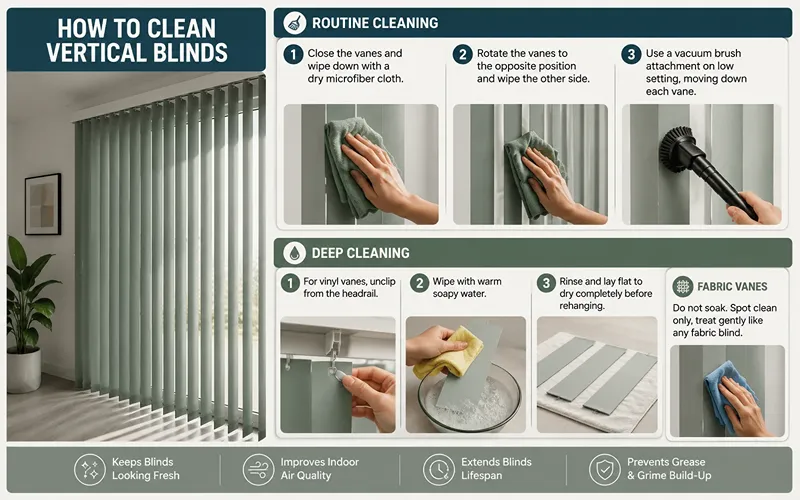
Vertical blinds collect less surface dust than horizontal ones, but grease and grime settle along the edges and base of each vane, especially in kitchens.
Routine cleaning:
- Close the vanes so they sit flat, then run a dry microfiber cloth down each one from top to bottom.
- Rotate the vanes to the opposite position and wipe the other side.
- For a faster routine pass, use a vacuum’s brush attachment on the lowest setting, moving down each vane.
Deep cleaning: For a deeper clean on vinyl vanes, unclip them from the headrail, wipe with a cloth dipped in warm soapy water, rinse, and lay flat to dry completely before rehanging, hanging them damp causes yellowing and tide marks at the base. Fabric vanes should never be soaked. Treat them the same gentle way you’d treat any fabric blind, spot clean only.
How to Clean Vinyl and Plastic Mini Blinds

Thin plastic slats bend more easily than aluminum, so always support them from behind while cleaning.
Routine cleaning:
- Close the slats and wipe with a dry cloth to lift loose dust first.
- Dampen a cloth in lukewarm water with a drop of dish soap, and wipe each slat individually, supporting it from behind as you go.
- Rinse with a clean, damp cloth and dry immediately with a towel.
Deep cleaning: For blinds that are heavily soiled, take them down and soak them briefly, around five minutes, in a tub of warm water with a little dish soap and a splash of white vinegar, gently swishing with your fingers, then rinse and let them dry fully in the open air before rehanging.
Keep the lift cords dry throughout. Repeated soaking makes the string ladder brittle, and it tends to snap during normal use well after the cleaning is done.
How to Clean Wood Blinds

Real wood is the most moisture-sensitive blind material there is, even light water contact can warp the slats or dull the finish.
Routine cleaning:
- Close the slats fully in one direction.
- Wipe each slat with a dry microfiber cloth or feather duster, moving in the direction of the wood grain rather than across it, which can scratch the finish over time.
- Tilt the slats the other way and repeat so both faces get cleaned without any moisture at all.
- For a vacuum pass, use the brush attachment on the lowest setting, supporting the blind from behind as you go.
Spot treating marks: For fingerprints or light marks, rub gently with a dry cloth first. If that doesn’t lift it, barely dampen a corner of the cloth, wipe only the mark, and immediately follow with a completely dry cloth to remove any trace of moisture.
If the slats have deep, ingrained grime or mold, that’s beyond a home fix, real wood needs professional dry cleaning at that point, since any home remedy involving water tends to make things worse.
How to Clean Faux Wood Blinds

Faux wooden blinds tolerates moisture far better than real wood, since it’s built from a PVC composite core, but it still has limits, the vinyl wrap can bubble if it’s soaked for too long.
Routine cleaning:
- Close the slats in one direction and wipe with a lightly damp microfiber cloth, unlike real wood, a bit of moisture here is fine.
- Tilt to the opposite direction and repeat.
Deep cleaning: For a deeper clean, unclip the slats, wipe each one quickly with a cloth dipped in lukewarm soapy water, then rinse and dry with a towel right away rather than letting them air-dry slowly. Avoid extended soaking. A quick wipe is safe; leaving the slats sitting in a tub of water lets the composite core swell, and once that happens the vinyl wrap separates for good.
How to Clean Roller Blinds
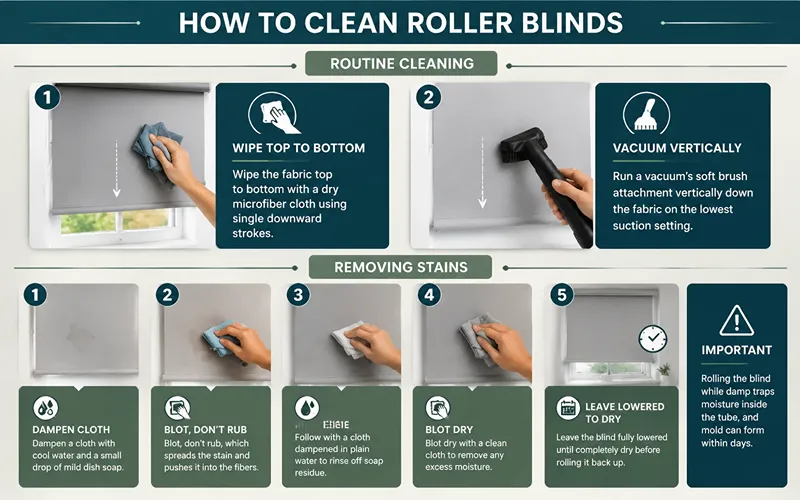
Roller blinds combine a coated fabric panel with a mechanism that must stay completely dry.
Routine cleaning:
- Lower the blind fully and wipe the fabric top to bottom with a dry microfiber cloth, using single downward strokes rather than side-to-side motions, which drag dust deeper into the weave.
- Alternatively, run a vacuum’s soft brush attachment vertically down the fabric on the lowest suction setting.
Removing stains: For stains, dampen a cloth with cool water and a small drop of mild dish soap, then blot, don’t rub, which spreads the stain and pushes it into the fibers. Follow with a cloth dampened in plain water to rinse off soap residue, then blot dry. Leave the blind fully lowered until it’s completely dry before rolling it back up, rolling it while damp traps moisture inside the tube, and mold can form within days.
If the fabric is heavily stained beyond a spot clean, that’s a job for professional cleaning rather than a home soak; most roller fabric isn’t machine-washable and the roller mechanism isn’t waterproof.
How to Clean Roman Blinds
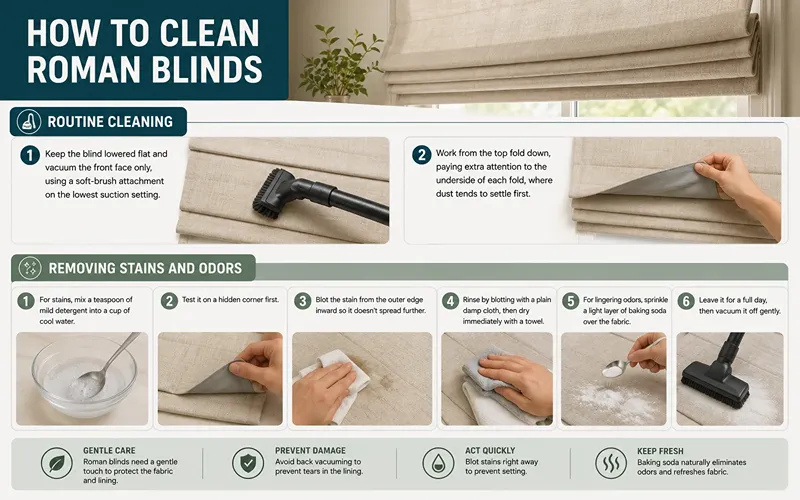
The stacked folds that give Roman blinds their look also trap dust and moisture between layers, so they need a gentler touch than most other types.
Routine cleaning:
- Keep the blind lowered flat and vacuum the front face only, using a soft-brush attachment on the lowest suction setting, the backing lining tears easily if you vacuum it directly.
- Work from the top fold down, paying extra attention to the underside of each fold, where dust tends to settle first.
Removing stains and odors: For stains, mix a teaspoon of mild detergent into a cup of cool water, test it on a hidden corner first, then blot the stain from the outer edge inward so it doesn’t spread further. Rinse by blotting with a plain damp cloth, then dry immediately with a towel. For lingering odors, sprinkle a light layer of baking soda over the fabric, leave it for a full day, then vacuum it off gently.
Cotton and polyester Roman blinds handle careful damp cleaning fine, but linen shrinks with moisture, and silk or faux silk should go to a professional dry cleaner rather than being cleaned at home.
How to Clean Fabric and Cellular (Honeycomb) Shades

The folded pockets in cellular shades trap more dust than a flat surface, so a gentle, targeted approach works better than wiping.
Routine cleaning:
- Use a compressed air can or a vacuum’s soft brush attachment to clear dust out of the honeycomb cells, working from the headrail down and covering both the inside and outside of the shade.
- For the headrail itself, lightly dampen a sponge or cloth with warm water and a little mild detergent, wring it out well, and wipe gently, keep water away from any openings, since it can damage the parts inside.
Removing stains: For stains on the fabric, use very light pressure with a barely damp cloth, working carefully so you don’t push moisture into the cell structure. Never soak honeycomb shades. Even getting them fully wet can permanently damage the fabric, and water that reaches the headrail can rust the internal components.
For years-old buildup that resists spot cleaning, a specialist window-treatment cleaning service is the safer route than experimenting at home.
How Often Should You Clean Your Blinds?

| Frequency | What to Do | Applies To |
| Weekly | A quick dry dusting, takes a couple of minutes per window and stops buildup before it starts | Every blind type |
| Monthly | A damp wipe-down | Vinyl, aluminum, and faux wood |
| Monthly | A vacuum pass | Fabric and wood blinds |
| Every 3-6 months | A full deep clean | Hard-material blinds |
| Every 3-6 months | A stain check | Fabric types |
| Every 3-6 months | A professional assessment | Silk or heavily soiled wood blinds |
Kitchens and bathrooms collect grease, steam, and humidity faster than other rooms, so blinds there generally need attention on the more frequent end of this schedule.
Common Mistakes to Avoid
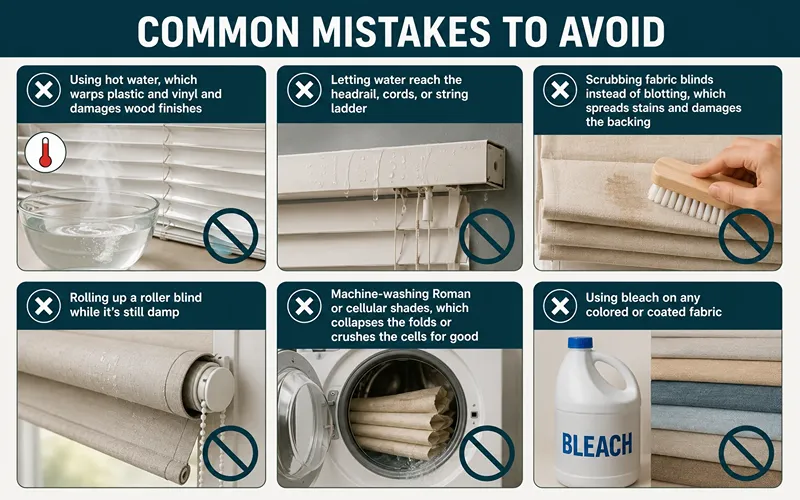
- Using hot water, which warps plastic and vinyl and damages wood finishes
- Letting water reach the headrail, cords, or string ladder
- Scrubbing fabric blinds instead of blotting, which spreads stains and damages the backing
- Rolling up a roller blind while it’s still damp
- Machine-washing Roman or cellular shades, which collapses the folds or crushes the cells for good
- Using bleach on any colored or coated fabric
Final Thoughts
Knowing how to clean blinds properly really comes down to one thing: matching the method to the material. What’s perfectly safe for a vinyl vertical blind can ruin a wood Venetian in a single pass, so it’s worth taking the extra minute to use the right process for what’s actually hanging in your window.
The easiest way to keep that from becoming a problem is to build cleaning into a routine rather than treating it as a one-off task. A one- to two-minute dusting each week keeps dust from turning into grease and grime, and it means the deeper cleaning methods in this guide only need to come out every few months instead of becoming a big weekend project. Stay consistent with it, and your blinds will stay looking sharp, operate smoothly, and last years longer than they would otherwise.
Frequently Asked Questions
Can I clean blinds without taking them down?
Yes, for most routine dusting and light damp wipes. Only heavily soiled hard-material blinds usually need to come down for a deeper clean, while fabric blinds like Roman shades should stay hanging almost always.
Is it safe to put blinds in water?
It depends on the material. Vinyl, aluminum, and plastic blinds handle a soapy soak well. Faux wood can take a quick wipe but not extended soaking. Real wood should never touch water, and fabric or cellular shades should only be spot cleaned.
What’s the quickest way to keep blinds clean between deep cleans?
A one- to two-minute dry dusting per window, done weekly, keeps most buildup from forming in the first place and cuts down how often a deeper clean is needed.
Why do my blinds turn yellow or develop water spots?
This usually happens when vinyl or plastic slats are rehung while still damp. Letting them air-dry completely and flat, rather than hanging them wet, prevents both issues.
Can I use vinegar to clean all blind types?
A diluted vinegar solution works well on vinyl, aluminum, and plastic blinds, but it isn’t suitable for real wood or delicate fabric shades, where plain water or a mild detergent solution is a safer choice.


