Squeaky floors are one of the most common complaints homeowners deal with, and the cause is rarely as serious as it sounds. In most cases, it comes down to loose floorboards, a shifting subfloor, or gaps caused by seasonal humidity changes, not structural damage. Better still, most squeaks can be fixed without tearing up the floor. This guide by Shoukat Interior covers 10 proven repair methods, plus targeted fixes for hardwood, laminate, vinyl, tile, and carpet.
What Causes a Squeaky Floor?

Before jumping into repairs, it helps to understand why flooring squeak in the first place. In almost every case, the noise isn’t coming from the floor covering itself, it’s coming from movement in the structure beneath it.
Common causes include:
- Loose subfloor: Over time, the plywood or OSB subfloor can separate slightly from the floor joists, especially in older homes where builders used smooth nails instead of ring-shank nails.
- Gaps between the subfloor and joists: As wood dries out, small gaps form, allowing the subfloor to flex and rub against the joist with every step.
- Humidity and seasonal changes: Wood naturally expands in humid months and contracts in dry ones. This constant movement loosens fasteners and creates the gaps that cause squeaking.
- Friction between floorboards: When two boards rub against each other, they produce that classic creak, often worsened by age or poor installation.
- Worn or missing nails: In older homes, nails can rust, loosen, or miss the joist entirely, leaving boards unsecured.
Identifying the source of the noise is the first step to choosing the right fix.
How to Find the Source of a Squeak?
- Walk slowly across the floor and note exactly where the noise occurs.
- Rock back and forth over the suspected spot to confirm the location.
- If you have access to the space below (a basement or crawlspace), have someone walk above while you watch the subfloor and joists move.
- Mark the squeaky spots with painter’s tape so you can find them again once you start repairs.
Once you’ve pinpointed the squeak, you can decide whether to fix it from above (through the finished floor) or from below (through the subfloor and joists), depending on your access.
10 Proven Methods to Fix Squeaky Floors
1. Sprinkle Powdered Graphite or Talcum Powder Between Boards
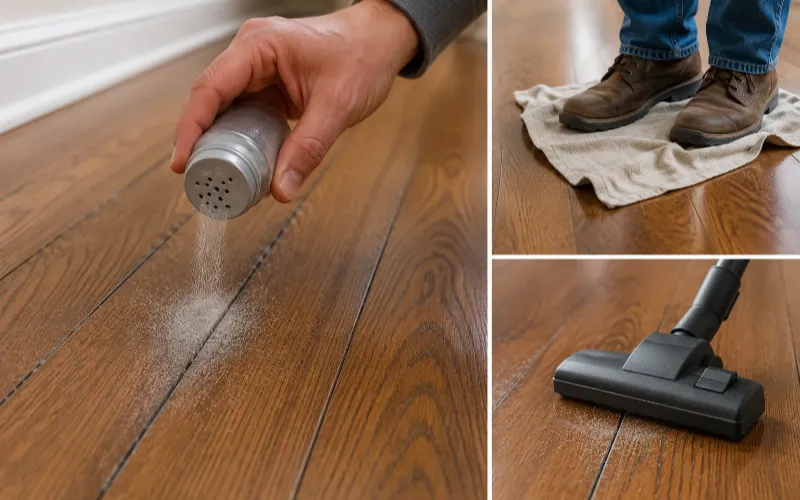
For minor squeaks caused by friction between hardwood boards, a dry lubricant is often the fastest fix. Sprinkle powdered graphite, talcum powder, or powdered soapstone into the gaps between boards, then lay a cloth over the area and work the powder in by walking or stepping on it repeatedly. Vacuum up the excess once the squeak stops.
This method works especially well for finished wooden floors where you don’t want to damage the surface.
2. Use Construction Adhesive on Loose Joists

If you can access the underside of the floor, apply construction adhesive to the seam where the subfloor meets the joist. This helps re-bond the two surfaces and stop the movement causing the squeak. For best results, have someone stand on the floor above while the adhesive sets to ensure a tight bond.
3. Drive Screws Through the Subfloor Into the Joist

One of the most reliable long-term fixes is to secure the subfloor directly to the joist with screws. Pre-drill a pilot hole to avoid splitting the wood, then drive a screw at a slight angle through the subfloor and into the joist. This pulls the two layers tightly together and eliminates the gap causing the noise.
4. Insert Shims Into Gaps Between the Subfloor and Joist

Sometimes the squeak comes from a visible gap between the subfloor and the joist rather than loose fasteners. In this case, coat a thin wood shim with construction adhesive and gently tap it into the gap until snug. Avoid overdriving the shim, as this can actually create a new gap on the other side.
5. Add a Bridge or Block for Extra Support
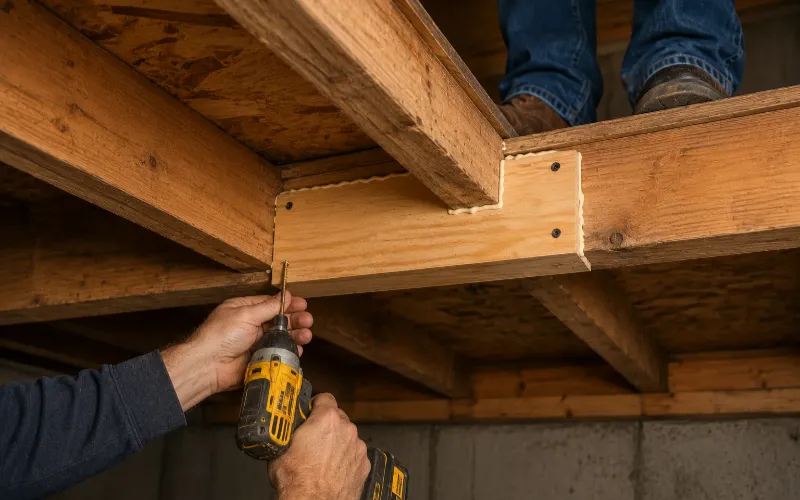
If a section of subfloor is sagging or flexing between two joists, installing a “bridge” (a small piece of plywood) or a “block” (a short piece of lumber) can add rigidity. Apply construction adhesive to the piece, position it against the subfloor and joist, and secure it with screws while someone stands on the floor above to ensure a tight fit.
6. Use Specialty Breakaway Screw Kits

For floors where you can’t easily access the subfloor from below, particularly under carpet, specialty squeak-repair kits are a practical solution. These kits typically include a joist-finding tool, an alignment fixture, and breakaway screws that snap off cleanly below the surface once installed, leaving no visible trace.
7. Secure Loose Boards With Finishing Nails or Trim Screws

For hardwood floors with a single loose board, driving a finishing nail or a small trim screw through the board at an angle can pull it tight against the subfloor. Pre-drill to prevent splitting, and choose a discreet spot near a seam to keep the repair hidden. Fill the hole with matching wood filler for a clean finish.
8. Control Indoor Humidity Levels

Since humidity swings are a major contributor to floor squeaks, maintaining a consistent indoor humidity level can prevent new squeaks from forming. Use a humidifier during dry winter months and a dehumidifier in humid summer months to keep wood flooring stable and minimize expansion and contraction.
9. Reinforce Warped or Noisy Joists

If an entire joist is warped or making noise along its length, you can attach a support piece of wood to create a flatter, more even surface for the floor above. In some cases, wedging additional lumber blocks between joists adds tension and support, reducing movement across a wider area.
10. Replace Severely Damaged Flooring or Subfloor

If squeaks are widespread, persistent, or accompanied by sagging, this may indicate a larger structural issue rather than a simple loose board. In these cases, replacing a section of subfloor, or the flooring itself, is often the more permanent and cost-effective solution rather than repeatedly patching individual squeaks.
How to Fix Squeaky Floors by Flooring Type
Not every flooring material responds to the same repair method. Here’s how to approach the fix based on what’s on top of your subfloor.
Squeaky Hardwood Floors
Hardwood squeaks are usually the easiest to diagnose because you can often work directly on the visible boards. Powdered graphite, finishing nails driven at an angle, or trim screws countersunk and filled with wood putty are the most common fixes. If the squeak originates below, screws driven up through the subfloor into the hardwood (without penetrating the surface) can also solve the problem from underneath.
Squeaky Floors Under Carpet
Carpet hides the subfloor, making the squeak harder to pinpoint but generally easier to fix without visible damage. Breakaway screw kits are the go-to solution: the screw is driven through the carpet and pad into the subfloor and joist, then snapped off below the surface, leaving the carpet undisturbed. Locate the joists first using a stud finder or joist-finding tool included in most kits.
Squeaky Laminate Floors
Laminate is a floating floor, meaning it isn’t nailed or screwed to the subfloor, so the fix is different from hardwood. Squeaks usually stem from an uneven subfloor or compressed underlayment rather than the laminate planks themselves. The fix typically involves unlocking the affected planks, leveling the subfloor with a patching compound, replacing damaged underlayment, and reinstalling the planks. Because laminate uses tongue-and-groove edges, work carefully to avoid cracking the locking mechanism.
Squeaky Vinyl and LVP Floors
Vinyl and luxury vinyl plank (LVP) don’t squeak on their own, the noise almost always comes from subfloor movement underneath. Since you can’t nail or screw through finished vinyl without damaging it, repairs usually need to happen from below via the basement or crawlspace, using shims, construction adhesive, or additional blocking between joists. Starting with a perfectly level subfloor during installation is the best way to prevent vinyl squeaks in the first place.
Squeaky Tile Floors
Tile is the most difficult flooring type to repair without removing material, since you cannot drill or nail through finished tile without risking cracks. If access from below isn’t possible, some tiles may need to be carefully removed to reach and secure the subfloor, a job best left to a professional if you don’t have tile installation experience. Using a decoupling membrane between the subfloor and tile during installation helps prevent movement-related squeaks and cracked grout in the future.
When to Call a Professional
Most squeaky floor repairs are manageable DIY projects, but you should consider calling a professional if:
- The squeaking is widespread across multiple rooms rather than isolated spots
- You notice sagging, bouncing, or visible unevenness in the floor
- The joists themselves appear warped, cracked, or damaged
- Your flooring is tile or another material that’s risky to repair without proper tools and experience
- Previous DIY attempts haven’t resolved the noise
A structural or flooring professional can diagnose deeper issues, such as joist damage or subfloor failure, that go beyond a simple loose board.
Final Thoughts
A squeaky floor is rarely a sign of a major problem, but it’s still worth fixing — both for your peace of mind and to prevent minor gaps from becoming bigger issues over time. Start by identifying the exact source of the noise, choose the repair method that matches your flooring type and access level, and don’t hesitate to call in a professional if the squeak points to something more structural. With the right approach, you can walk across your home in silence again.
Frequently Asked Questions
Will WD-40 fix a squeaky floor?
WD-40 can offer a very temporary reduction in noise by lubricating wood joints, but it’s not a long-term solution and can leave residue or attract dirt. Dry lubricants like powdered graphite are a better choice for wood floors.
Can I fix a squeaky floor without removing the flooring?
In many cases, yes. Techniques like inserting screws from below, using breakaway screw kits under carpet, or applying powdered lubricant between hardwood boards don’t require removing the flooring at all.
Do squeaky floors mean structural damage?
Not usually. Most squeaks are caused by minor gaps or loose fasteners rather than structural problems. However, persistent squeaking combined with sagging or visible damage can signal a more serious issue that warrants a professional inspection.