

Carpet beetles are tiny pests, but they cause big problems. They silently chew through your carpets, rugs, upholstery, and even clothing, leaving behind damage that is both frustrating and costly to fix. If you have noticed small holes in your fabric, shed skin near your skirting boards, or tiny oval-shaped insects crawling around your home, you are not alone. Carpet beetle infestations are more common than most homeowners realize.
The good news? You can deal with them effectively. In this guide, we cover everything you need to know: how to spot them, how to eliminate them fast, and how to stop them from ever coming back. With expert cleaning and home care insights from Shoukat Interior, you’ll learn practical solutions to keep your home pest-free and protected.
What Are Carpet Beetles?

Carpet beetles are small, oval-shaped insects that feed on natural fibers. Despite their name, they do not limit themselves to carpets alone. They target wool, silk, fur, feathers, leather, and even stored pantry items.
Adult beetles grow to about 1/8 to 1/10 of an inch in length. They found colors from solid black to a mix of white, brown, and yellow, depending on the species. Larvae are slightly longer and covered in bristly hairs. This is where the real damage comes from.
There are three common species found in homes: the black carpet beetle, the varied carpet beetle, and the furniture carpet beetle. All three can cause significant textile damage if left untreated.
5 Clear Signs You Have a Carpet Beetle Infestation

Detecting a carpet beetle problem early is the key to limiting damage. Watch for these warning signs:
Irregular holes in fabrics
Unexplained holes appearing in rugs, wool clothing, curtains, or upholstered furniture are one of the most obvious signs of larval activity.
Shed larval skins
Wall to Wall Carpet beetle larvae shed their skins as they grow. These thin, papery husks are found under rugs, along skirting boards, and inside closets.
Tiny dark droppings
Larvae leave behind small, pepper-like faecal pellets near areas where they are actively feeding.
Dead beetles near windows
Adult beetles are drawn to light. Finding dead or live beetles on window sills or near lamps is a strong indicator of an infestation nearby.
Skin irritation or rash
Carpet beetles do not bite, but the bristly hairs on their larvae can cause a skin rash or red welts on sensitive individuals, sometimes mistaken for insect bites.
Where Do Carpet Beetles Hide?

Carpet beetles prefer dark, undisturbed spaces where they can lay eggs and feed without interruption. Common hiding spots include:
- Inside wardrobes and clothing drawers
- Under heavy furniture and along carpet edges
- In attics, loft spaces, and storage rooms
- Inside air vents and HVAC ducts
- Old bird nests or rodent nests near or inside the property
- In decorative rugs, antique carpets, and handwoven textiles
If you own high-quality handmade rugs or wool carpets, these are particularly at risk. Carpet beetle larvae actively seek out the natural animal fibers found in these items.
How to Get Rid of Carpet Beetles: Natural Methods
Before reaching for chemical treatments, try these highly effective natural methods. For mild to moderate infestations, they often deliver excellent results.
1. Vacuum Thoroughly and Daily

Vacuuming is your first and most powerful weapon. Run your vacuum over all carpets, rugs, and hard floors every single day while dealing with an infestation. Pay close attention to carpet edges, skirting boards, under furniture, and inside wardrobes. Use the crevice attachment to reach into tight corners and along baseboards.
2. Wash All Affected Fabrics in Hot Water

Launder any fabrics you suspect have been affected, such as clothing, bedding, cushion covers, and small rugs. Use hot water (above 60°C / 140°F) and dry on the highest heat setting your fabric allows.
The high temperature of the washing process kills carpet beetles at every stage: eggs, larvae, and adults. This is one of the most reliable methods available.
3. Steam Clean Your Carpets and Upholstery

Steam cleaning combines heat and moisture to kill carpet beetles on contact. The high temperature penetrates deep into carpet fibers, reaching areas that ordinary vacuuming cannot. Run a steam cleaner over all carpets and upholstered furniture, including along edges and seams where larvae tend to gather.
4. Freeze Small Infested Items

For delicate items that cannot be washed, such as antique textiles, decorative cushions, or woolen accessories, freezing is an excellent option. Place the item in a sealed plastic bag and put it in a freezer set to -20°C (-4°F) for at least 72 hours. This exposure to extreme cold kills all life stages, including eggs.
5. Apply Diatomaceous Earth
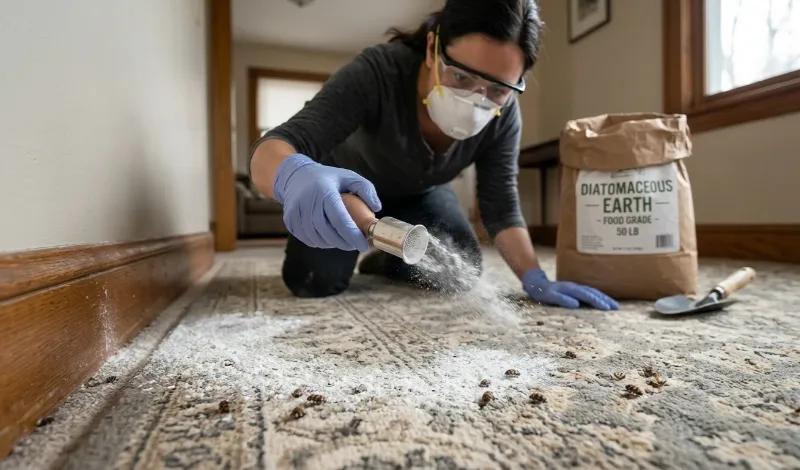
Diatomaceous earth is a natural, non-toxic powder made from fossilized algae. It works by damaging the exoskeleton of insects, causing them to dehydrate and die. Sprinkle a fine layer along carpet edges, in wardrobes, and under furniture. Leave it for 48 to 72 hours, then vacuum it up thoroughly. It is safe for humans and pets when used correctly.
6. Use Cedar Wood Products

Cedar wood naturally repels carpet beetles through the oils it releases. Place cedar balls, cedar rings, or cedar blocks inside wardrobes, drawers, and storage boxes where you keep woolen or natural-fiber clothing. Cedar chips can also be placed in small cloth bags and tucked under carpets or inside storage boxes. Replace or refresh them every few months as the scent fades over time.
How to Get Rid of Carpet Beetles: Chemical Treatments

For severe or persistent infestations, chemical treatments may be necessary. These should be used with caution, especially in homes with children or pets.
-
Insecticide Sprays
Look for insecticides containing active ingredients such as deltamethrin, bifenthrin, or cyfluthrin. These are effective against carpet beetle larvae and adults. Apply along skirting boards, carpet edges, under furniture, and in wardrobes. Always test on a small hidden area first to check for staining, and follow all label safety instructions carefully.
-
Boric Acid
Boric acid is a mild insecticide that is lethal to carpet beetles when ingested. Sprinkle a light, even layer over carpets and rugs, then gently brush it in with a soft broom. Leave it for a few hours before vacuuming up. Keep children and pets out of treated areas until the powder has been vacuumed and surfaces are clean. Boric acid can be toxic if used in large quantities.
When to Call a Professional
If the infestation is widespread, keeps returning, or has spread to multiple rooms, it is time to call a professional pest control company. They have access to stronger treatments and the expertise to locate hidden breeding spots you may have missed.
How to Prevent Carpet Beetles From Coming Back

Getting rid of carpet beetles is only half the battle. Keeping them out for good requires some simple, ongoing habits. Here is what works:
-
Keep Your Home Clean and Clutter-Free
Regular, thorough cleaning removes the food sources carpet beetles depend on. Vacuum carpets and rugs at least once a week, paying attention to edges and under furniture. Sweep hard floors and mop with a disinfectant cleaner.
Regularly clear out storage areas, unused clothing, and dark corners, especially in wardrobes and attics.
-
Store Natural-Fiber Items Properly
Wool, silk, cashmere, and other natural-fiber clothing should be stored in airtight bags or sealed containers. Add cedar blocks, lavender sachets, or mothballs inside to deter beetles from entering.
Wash clothes before storing them for long periods. Carpet beetles are attracted to soiled fabrics; even light perspiration or food residue is enough to attract them.
-
Seal Entry Points
Adult carpet beetles fly in from outside. Check that all window screens, door seals, and ventilation covers are secure and free of gaps. Seal cracks around pipes and skirting boards using caulk.
Inspect cut flowers before bringing them indoors, as adult carpet beetles often travel on outdoor flowers and enter homes this way.
-
Inspect Used Items Carefully
Used furniture, vintage rugs, second-hand clothing, and items from storage units can introduce carpet beetles into a clean home. Always inspect these carefully before bringing them inside. If in doubt, wash or freeze the item first.
-
Keep Pantry Foods Sealed
Certain species of carpet beetle also feed on stored pantry items like flour, seeds, grains, and dry pet food. Store these in airtight containers to remove this food source entirely.
Protecting Your Carpets and Rugs in the UAE
In the UAE, high-quality carpets, handmade rugs, and upholstered furniture represent a significant investment. Carpet beetles can cause costly, irreversible damage to these items, especially those made from wool, silk, or other natural fibers.
We offer a full range of carpet, flooring, and renovation services across Dubai and the UAE. From durable SPC flooring to luxurious handcrafted rugs, we help you choose the right products for your home and lifestyle.
Final Thoughts
Carpet beetles are persistent, but they are absolutely manageable with the right approach. Start with thorough vacuuming and hot washing. Add steam cleaning and targeted treatments for stubborn cases. And most importantly, build the prevention habits that stop them from returning.
Your carpets, rugs, and upholstery deserve protection. Act quickly when you spot the signs, and do not hesitate to seek professional help if the infestation is spreading.
Frequently Asked Questions (FAQ)
- Do carpet beetles bite humans?
No, carpet beetles do not bite humans. However, the bristly hairs on their larvae can cause a skin rash, redness, or itchy welts: a condition known as carpet beetle dermatitis. This is an allergic reaction, not a bite.
- How long does it take to get rid of carpet beetles?
With consistent treatment, most mild infestations can be cleared within two to four weeks. Severe infestations may take longer and often require professional pest control. The key is to stay consistent with vacuuming, washing, and treating affected areas.
- What kills carpet beetle eggs?
Extreme heat and cold are the most effective solutions. Washing fabrics at 60°C or above, steam cleaning, and freezing items at -20°C for 72+ hours will kill carpet beetle eggs reliably. Some insecticides are also effective against eggs on hard surfaces.
- Can carpet beetles live in synthetic carpets?
Adult carpet beetles generally do not eat synthetic fibers. However, they will still search across synthetic carpets for food sources, such as pet hair, dead insects, food crumbs, and spilled organic matter. So while synthetic carpets are less vulnerable, they are not immune to infestation.
- Where do carpet beetles come from?
Adult carpet beetles typically enter homes from outside. They fly in through open windows, doors, and ventilation gaps, often traveling on cut flowers or flying toward indoor lights. Once inside, they look for dark, undisturbed spots to lay their eggs near natural fiber food sources.
- Can I use vinegar to kill carpet beetles?
Apple cider vinegar or white vinegar can help deter carpet beetles when used to wipe down hard surfaces like shelves, drawers, and window sills. It is not a standalone treatment for an active infestation, but it is a useful part of a broader cleaning and prevention routine.


